

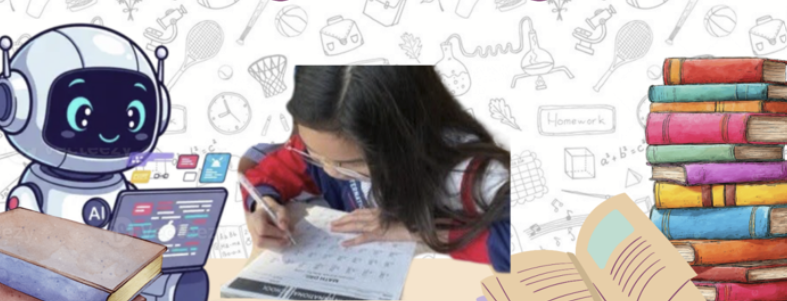
Why Human Creativity Still Matters in a World of Artificial Intelligence
Before, apart from quiz bees, essay writing competitions dominated each young achiever’s list of goals. Proof that, apart from simple memorization, they were capable of composing something from their own thoughts and ideas. Near-perfect grammar and a wide range of vocabulary earned them the “walking dictionary” nickname. But with AI on the rise, these achievements lose value faster than ever. What happens when acquired intellect gets replaced by artificial intelligence?
It started with simple grammar checkers, then moved on to paraphrasers. New features were added so you can adjust your writing tone, not just correct mistakes. Little by little, those apps and websites did more than just help; they thought for us. Now, it is so easy to type out a prompt and get amazing results in just a matter of seconds. Sometimes, the prompt doesn’t even have to make complete sense. “Essay about AI. 500 words. Written by a 6th grader,” and just like that, an essay is finished.
Because of this, teachers learned to adapt. As soon as generative AI bloomed, AI detectors followed. While this did wonders for catching AI users red-handed, it was backfiring for students who were writing at an “AI-level.” AI detectors used common essay patterns and structures to spot AI work, but these patterns and structures could also have been easily taught to students who actually pay attention in class and write well. As a result, the goal of essay-writing went from trying to create the best article ever to making sure nothing sounds so impressive that it sounds like AI.
Therefore, AI didn’t just strip away our ability to think critically and creatively, but also our drive to improve our work. Instead of helping us go further, the use of AI for academic dishonesty hinders us from fully utilizing its potential to complement how we work. This begs the question: where do we draw the line?
Glenchelle Anne D. Villarante